
How to Choose a Wig Manufacturer for Your Salon: The Complete Buyer’s Guide
Choosing a wig manufacturer for your salon is not simply about finding beautiful products or the lowest wholesale price.
For a professional salon, the right manufacturer can affect your client experience, product quality, inventory costs, profit margins, repeat business, and ability to expand into new hair products.
And not every salon looking for a wig supplier is already a specialist wig salon.
Some are established wig businesses looking for a more reliable manufacturer.
Others are traditional hair salons that have started hearing clients ask for more volume, hair extensions, toppers, or wigs.
Some simply want to test a new product category without investing heavily in inventory.
The right supplier should be able to support your business at different stages.
This guide explains what professional salon buyers should look for when choosing a human hair wig manufacturer, how to evaluate suppliers, how to manage inventory, and how to introduce new hair products without taking unnecessary purchasing risks.
For an overview of hair solutions designed specifically for professional buyers, explore our professional hair solutions for salons and stylists.
Quick Answer: What Should a Salon Look for in a Wig Manufacturer?
A salon should evaluate a wig manufacturer based on human hair quality, manufacturing consistency, MOQ flexibility, in-stock availability, custom options, lead times, quality control, and repeat-order capability. The best supplier is not necessarily the cheapest one; it is the manufacturer that can consistently provide the right products and support your salon as your business grows.
What Should a Salon Look for in a Wig Manufacturer?

A reliable wig manufacturer for salons should provide more than a product catalog.
Before placing an order, evaluate whether the manufacturer can offer:
- Consistent human hair quality
- Professional wig construction
- Clear product specifications
- Custom manufacturing
- Selected in-stock products
- Reasonable MOQs
- Sample options
- Reliable quality control
- Consistent repeat orders
- Clear production lead times
- Professional communication
- Wholesale pricing
- OEM and private-label capabilities
- Support as your business grows
The most important word is consistency.
A supplier may provide an excellent first sample. But if the second order has different density, color, texture, construction, or hair quality, the first sample does not mean much.
For a professional salon, the real question is:
Can this manufacturer consistently deliver the product my clients expect?
1. Start With the Human Hair, Not the Marketing

The first question should be:
What kind of hair is actually going into the wig?
“100% human hair” alone does not tell a professional buyer enough.
You should understand:
- Hair source and selection
- Hair direction
- Hair quality
- Processing level
- Length
- Density
- Texture
- Color
- Shedding behavior
- Tangling behavior
- Styling performance
- Performance after washing
Your client experiences the actual hair, not the supplier’s marketing description.
A wig that looks beautiful in a photograph but becomes difficult to manage after washing or styling can create problems for both the stylist and the client.
Instead of asking only:
“Is this real human hair?”
ask:
“How do you select, process, inspect, and maintain the quality of the hair used in your wigs?”
A professional manufacturer should be able to explain its process clearly.
Learn more about our human hair products and hair quality standards.
2. One Good Sample Does Not Prove Manufacturing Consistency
This is one of the most overlooked issues when choosing a wig manufacturer.
Suppose you order one wig and the quality is excellent.
You recommend it to several clients.
Three months later, you reorder the same specification.
What happens if the new batch has:
- Different density
- Different color
- Different texture
- Different hair quality
- Different length
- Different construction
?
The problem is not simply product quality.
It is manufacturing consistency.
For a professional salon, repeat-order consistency can be more important than the quality of one individual sample.
Before placing an order, ask:
How do you maintain consistency between production batches?
Also ask whether the manufacturer records your product specifications for future orders.
This becomes particularly important when you develop a best-selling wig or extension product that clients expect to purchase again.
3. Understand Wig Construction
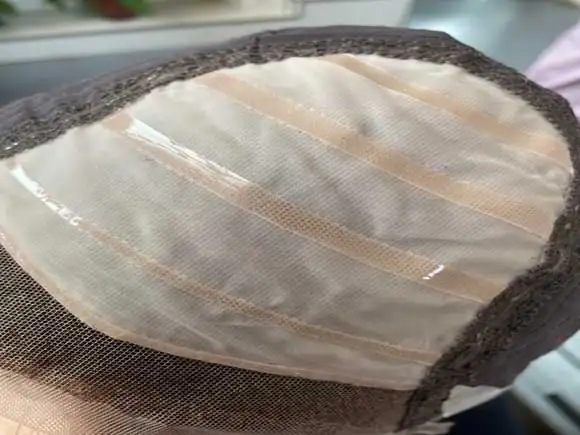
Hair quality is only one part of a wig.
The construction affects how the wig fits, looks, moves, and performs.
Depending on your salon’s services, evaluate:
Lace
What lace options are available?
Hairline
Can the hairline be customized?
Density
Are different density levels available?
Cap
Are different cap sizes and constructions available?
Ventilation
How is the hair attached to the base?
Parting
What parting configurations are available?
Base Materials
What materials are used for different wig designs?
Glueless Options
Are glueless constructions available where appropriate?
A professional manufacturer should provide specifications rather than simply sending photographs.
For more information about manufacturing and craftsmanship, explore our hair factory and craftsmanship.
4. Custom Wigs Give Salons More Control
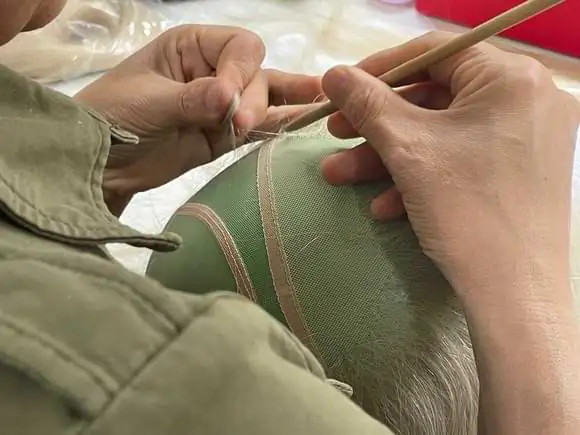
Standard wigs are convenient, but professional salons often have clients with requirements that do not fit a standard product.
For example:
- Specific length
- Specific density
- Custom color
- Specific texture
- Different cap size
- Customized hairline
- Particular base
- Special construction
This is where custom wigs for salons become valuable.
However, do not stop at asking:
“Do you make custom wigs?”
Ask:
- What can be customized?
- What is the MOQ?
- What is the additional cost?
- What is the production time?
- Can the specification be reproduced?
- Can the manufacturer keep the specification for future orders?
Customization is most useful when the process is clearly defined.
YELUX supports professional hair solutions for salons and stylists, including customized products based on specific requirements.
5. Your Salon Does Not Have to Be a Wig Specialist to Start Selling Wigs
Many salons do not start as wig specialists.
They start with:
- Haircuts
- Coloring
- Styling
- Hair extensions
- Hair treatments
- Bridal services
- Beauty services
Then clients begin asking questions.
“Can you make my hair look fuller?”
“Can you add more volume?”
“My hair is getting thinner. What can I do?”
“Do you offer extensions?”
“Do you sell wigs?”
These questions can reveal an opportunity.
The client may not need another haircut.
She may need more hair, more volume, more coverage, or a different hair solution.
And a salon that can offer an appropriate solution has another opportunity to serve that client.
6. Why Salons Are Adding Wigs and Hair Products
An established salon does not necessarily need to transform itself into a full wig store.
It can simply add another solution to an existing client relationship.
Your salon already has something extremely valuable:
Clients who trust your stylists.
Those clients may eventually need:
- More volume
- More length
- Hair extensions
- Hair toppers
- Wigs
- Hair replacement solutions
- Temporary style changes
- Special-event hair solutions
Instead of sending those clients somewhere else, the salon can introduce appropriate professional hair products.
This can create an additional revenue opportunity without changing the salon’s entire business model.
Explore our salon-focused professional hair solutions.
7. The “I Want More Volume” Client
Consider a common salon consultation.
A client comes in for a haircut.
During the consultation, she says:
“My hair feels much thinner than it used to.”
The stylist cuts the hair.
But the client still wants more volume.
A haircut cannot create additional hair.
Depending on the client’s needs, a professional salon may consider:
- Hair extensions
- Genius Weft extensions
- Hair toppers
- Volumizers
- Human hair wigs
The important point is not to push a product.
The stylist simply needs to have more professional solutions available when the client’s needs go beyond cutting and styling.
8. Start With a Proven Product Instead of Buying Everything
If your business is new to professional hair products, you do not need to launch wigs, toppers, extensions, and every other category simultaneously.
That can create unnecessary inventory risk.
A more controlled approach is:
Start → Test → Learn → Reorder → Expand → Customize
For many salons, professional hair extensions can be a practical starting point because they are closely connected to an existing demand:
More length + more volume + a new look.
Instead of purchasing dozens of unrelated products, start with a focused range.
9. Why Genius Weft Can Be a Practical Starting Point for Salons
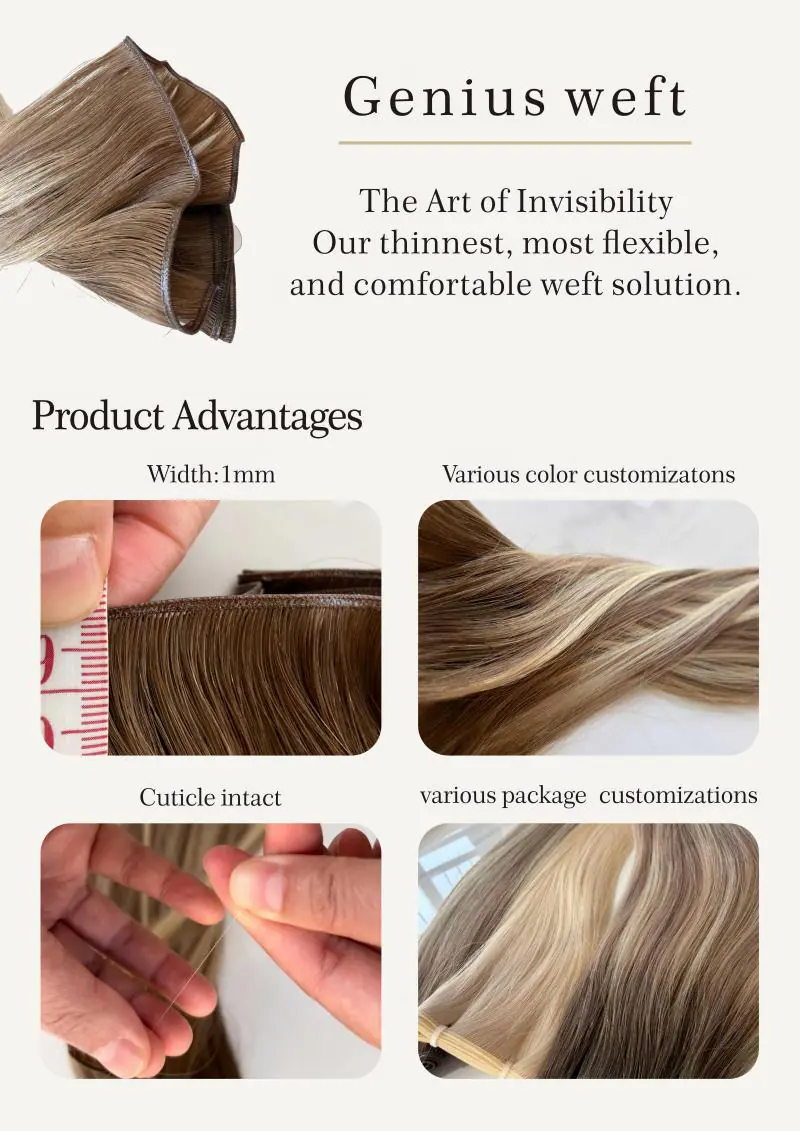
For salons that are beginning to expand their professional hair product range, Genius Weft extensions can be a practical product category to test, particularly when the salon already offers extension services or has clients asking for more length and volume.
Instead of purchasing a huge catalog, begin by testing a focused selection of:
- Popular lengths
- Common colors
- Suitable textures
- Professional-grade hair
- Appropriate quantities
The goal is not to have the biggest catalog.
The goal is to discover:
What actually sells to your clients?
YELUX offers Genius Weft and other professional hair solutions for salons, including selected products available from stock and custom options for specific requirements.
10. Start With Products That Fit Your Customers
A new salon buyer does not necessarily need to invent a product mix from scratch.
One way to reduce the learning curve is to begin with products that fit the needs of your existing customers.
Instead of asking:
“What are all the products I could sell?”
ask:
“Which products fit the clients I already serve?”
This changes the decision from speculation to testing.
A focused product test can help you understand:
- Which colors sell
- Which lengths sell
- Which textures clients prefer
- What price points work
- How frequently clients reorder
- Which products deserve more inventory
Once you know what works, you can expand with greater confidence.
11. A Simple Product Development Roadmap for Salons
A salon that is new to hair products does not need to expand everything at once.
A practical progression can look like this:
Stage 1 — Test One Proven Product
Start with a focused Genius Weft range or another product that fits your existing customer base.
Stage 2 — Reorder What Actually Sells
Identify your best-performing colors, lengths, textures, and specifications.
Stage 3 — Add a Related Product
Once you understand your customers, consider adding:
Extensions → Toppers
or
Extensions → Wigs
depending on the needs you are seeing.
Stage 4 — Build a Small Wig Selection
Start with a focused selection rather than attempting to stock every possible specification.
Stage 5 — Introduce Custom Products
Once you have enough customer feedback, consider custom wigs, custom extensions, custom colors, or other specialized products.
Stage 6 — Develop Your Own Brand
After demand is proven, you may consider:
- OEM
- Private label
- Custom collections
- Salon-exclusive products
The progression is:
Test → Learn → Reorder → Expand → Customize → Brand
12. Do Not Buy Products Just Because They Look Good Online
A product can look excellent on a supplier’s website and still be wrong for your customers.
Before expanding your range, ask:
Will my clients actually need it?
Can my stylists confidently recommend it?
Can I explain the benefits to customers?
Can I make a reasonable margin?
Can I reorder it?
Is it available when I need it?
Can the manufacturer reproduce the same specification?
If the answer is yes, the product has a much better chance of becoming a sustainable part of your business.
13. Inventory Risk Is One of the Biggest Problems for New Product Lines
When a salon launches a new product category, there are two common mistakes.
Buying Too Much
The salon purchases a large inventory before understanding demand.
The result:
Cash tied up in slow-moving products.
Buying Too Little Without a Replenishment Plan
The salon finds a product that sells well but cannot replenish it quickly.
The result:
Lost sales and disappointed clients.
A better approach is:
Start with a manageable quantity.
Track what sells.
Replenish successful products.
Keep custom options available for special requirements.
This is why a manufacturer offering both selected in-stock products and custom manufacturing can be particularly useful.
14. Why In-Stock Wigs Matter to Busy Salons
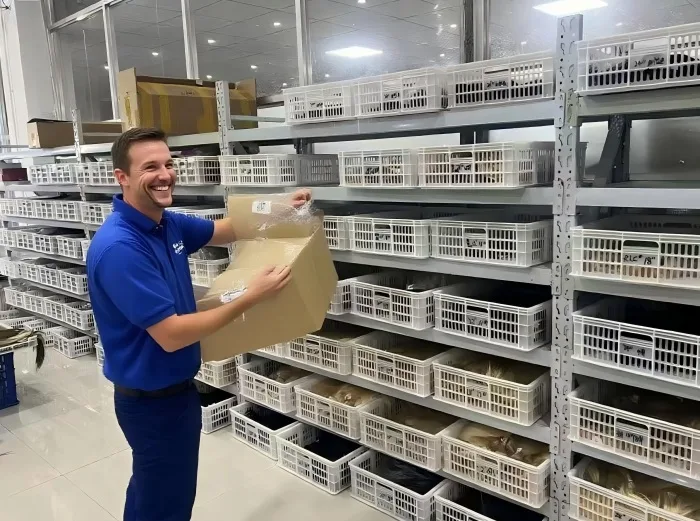
For a salon, inventory is not simply about having products sitting on a shelf.
It is about being able to respond when a client needs something.
Imagine:
A client has an appointment next week.
She has already selected a wig.
The stylist has scheduled the service.
Then the salon discovers:
The wig is out of stock.
The supplier says:
“We can manufacture it.”
But production takes several weeks.
Now the salon has a problem.
It is not just an inventory issue.
It can affect the appointment, the client’s experience, and potentially future business.
This is why in-stock inventory can be a major advantage for professional salon buyers.
15. What If Your Best-Selling Wig Suddenly Sells Out?
This is one of the most important questions to ask a manufacturer before you need the answer.
A popular product can sell faster than expected.
If the supplier needs several weeks to manufacture it, you may lose sales while waiting.
For this reason, ask:
“What wigs and hair products are currently in stock?”
and:
“How quickly can in-stock products be dispatched?”
Do not assume that a product shown on a website is automatically available.
Inventory changes continuously.
A professional buyer should request the manufacturer’s latest stock list.
YELUX offers selected in-stock wigs and professional hair products for salons, while also supporting custom manufacturing for products that require specific specifications.
16. In-Stock + Custom Manufacturing Is a Flexible Supply Model
Professional buyers do not necessarily need to choose between a stock supplier and a custom manufacturer.
The strongest model can combine both.
Use In-Stock Products For:
- Urgent client requirements
- Replenishment
- Product testing
- Smaller initial orders
- Fast-moving products
- Immediate purchasing needs
Use Custom Manufacturing For:
- Specific specifications
- Custom colors
- Custom density
- Special cap requirements
- Private label
- OEM
- Long-term product development
This gives salons more flexibility.
You can stock what sells regularly while using custom manufacturing for products that require special specifications.
17. Your Salon Does Not Need to Know Everything About Wigs Before Starting
Another concern for salons entering the wig market is knowledge.
A stylist may be highly experienced in:
- Cutting
- Coloring
- Styling
- Extensions
but have limited experience with:
- Wig construction
- Lace
- Density
- Cap measurements
- Wig customization
That does not mean the salon cannot enter the category.
It means the supplier relationship becomes more important.
A professional manufacturer should be able to explain product specifications and help buyers understand the available options.
The goal is to make the purchasing process easier, not to make the salon become a wig manufacturing expert.
18. Wigs, Toppers or Extensions: Which Should a Salon Start With?
There is no universal answer.
Start with the problem your clients are already asking you to solve.
| Client Need | Potential Product |
|---|---|
| More volume | Genius Weft / Extensions |
| More length | Hair Extensions |
| Localized thinning | Hair Topper |
| Greater coverage | Human Hair Wig |
| Complete hair transformation | Human Hair Wig |
| Specific requirements | Custom Wig |
| Unique product concept | Custom Manufacturing |
This means you can build your product range around real customer demand instead of simply adding products because a supplier offers them.
19. Turn Existing Client Questions Into New Revenue Opportunities
Your existing customers can tell you what products your salon should consider offering.
Listen for questions such as:
“How can I make my hair look thicker?”
“Can you add more volume?”
“My hair is getting thinner. What can I do?”
“Can you make my hair longer?”
“Is there something I can wear temporarily?”
“Do you sell wigs?”
These are signals of unmet client needs.
The salon already has the relationship.
The stylist already understands the client’s hair.
The manufacturer provides the product.
Together, they can create a broader professional solution.
Instead of:
Haircut → Client Leaves
the relationship can become:
Consultation → Hair Service → Product Recommendation → Product Sale → Follow-Up → Repeat Client
The goal is not to sell a wig to every client.
The goal is to make sure that when a client has a hair-related need, your salon has an appropriate solution available.
20. Where Your Salon Is Located Matters
A salon in New York does not necessarily purchase hair the same way as a salon in London, Toronto, Sydney, Berlin, or Paris.
Client expectations, salon business models, purchasing volumes, shipping distances, product preferences, and delivery requirements can influence how professional buyers choose a supplier.
That is why choosing a wig supplier for salons should not be based only on product photos and wholesale prices.
Wig Suppliers for Salons in the USA
The US is a major market for professional human hair products, with a diverse salon landscape that includes independent stylists, boutique salons, specialist wig businesses, hair replacement providers, and larger salon groups.
US salon buyers may prioritize:
- Natural-looking human hair wigs
- Different lengths and densities
- Custom colors and textures
- Fast replenishment
- Wholesale pricing
- Flexible order quantities
- Consistent repeat orders
- Custom manufacturing
- Private label
For a salon, running out of a popular wig can mean more than an inventory problem.
It can mean a missed appointment or a client choosing another salon.
For buyers searching for a wig supplier in the USA, evaluate both product quality and the supplier’s ability to support current inventory, replenishment, and custom production.
Wig Suppliers for Salons in the UK
The UK has an established hair and beauty sector, with hairdressing and beauty salons representing a large group of small businesses.
For UK salon buyers, important considerations can include:
- Consistent quality
- Professional wig construction
- Wholesale supply
- Custom options
- Flexible purchasing quantities
- Clear lead times
- International shipping
- Fast access to available stock
For independent salons and specialist wig businesses, flexibility can be particularly valuable.
A supplier that only works with very large production quantities may not be suitable when a salon needs to replenish a popular product quickly.
For buyers searching for a wig supplier in the UK, ask:
Can this supplier support my salon after the first order?
Wig Suppliers for Salons in Canada
Canada has a large personal care services sector, with many businesses operating as small independent establishments.
For professional salon buyers, this makes purchasing flexibility important.
Canadian buyers may value:
- Flexible order quantities
- Wholesale human hair wigs
- Reliable repeat supply
- Custom manufacturing
- Current stock information
- Clear shipping information
- Responsive communication
For buyers searching for a wig supplier in Canada, inventory planning can be particularly important when products are sourced internationally.
Wig Suppliers for Salons in Australia
Australian professional buyers can face a similar sourcing challenge: obtaining international products while maintaining enough inventory to avoid interruptions to client services.
Useful supplier capabilities can include:
- Ready-to-ship inventory
- Consistent human hair quality
- Professional extensions
- Custom wigs
- Custom colors
- Flexible wholesale quantities
- Reliable international fulfillment
For an Australian salon, an important question is not simply:
“What is your wholesale price?”
It is:
“How quickly can I replenish this product when I run out?”
That question can directly affect client service and sales.
Wig Suppliers for Salons in Germany
Germany is an important European market for professional hair products.
For German salon buyers, supplier evaluation may include:
- Product consistency
- Clear specifications
- Reliable communication
- Quality information
- Repeat-order consistency
- Professional packaging
- Predictable lead times
- Custom manufacturing
For professional buyers, a long-term supplier relationship can therefore be more valuable than simply finding the lowest initial quotation.
A manufacturer should be able to explain exactly what is being supplied, how it is manufactured, what can be customized, and how repeat orders are handled.
Wig Suppliers for Salons in France
France has a large hair salon market and a competitive professional beauty industry.
French salon buyers may evaluate suppliers based on:
- Natural appearance
- Human hair quality
- Professional styling performance
- Product consistency
- Customization
- Wholesale pricing
- Reliable supply
- Current inventory
For salons offering premium services, the supplier relationship can influence the salon’s ability to maintain consistent client results.
21. Can a Normal Wig Supplier Really Support a Professional Salon?
A supplier may be able to sell you a wig.
That does not necessarily mean it can support your salon.
Ask:
Can they reproduce the same product?
Can they provide current inventory information?
Can they handle urgent replenishment?
Can they customize products?
Can they provide consistent specifications?
Can they support repeat orders?
Can they communicate quickly when something changes?
Can they support your business as your order volume grows?
These are the differences between a product seller and a long-term manufacturing partner.
For businesses purchasing multiple hair categories or planning larger-volume sourcing, explore our wholesale hair supply and distribution services.
22. Manufacturer vs. Distributor: Which Is Better for a Salon?
Both models can make sense.
A Distributor May Be Useful When You Prioritize:
- Local inventory
- Convenience
- Smaller orders
- Local fulfillment
A Direct Manufacturer May Be More Useful When You Need:
- Factory-direct communication
- Customization
- Product development
- OEM
- Private label
- Manufacturing specifications
- Repeat-order support
- Larger wholesale quantities
If your salon is purchasing a few products occasionally, a distributor may be convenient.
If you are developing a long-term product range, custom collection, or private-label business, direct manufacturing may provide more control.
23. Do Not Compare Wig Suppliers by Price Alone
A common purchasing mistake is contacting five manufacturers and choosing the lowest quotation.
That is not a meaningful comparison unless the specifications are identical.
Compare:
- Same hair quality
- Same length
- Same density
- Same texture
- Same color
- Same construction
- Same lace/base
- Same quantity
- Same packaging
- Same shipping conditions
Only then can you make a useful price comparison.
A supplier quoting a lower price may simply be quoting a different product.
The better question is:
What is the total value of this product for my salon?
24. Think About Total Cost, Not Just Unit Cost
A wig’s purchase price is only one part of the real business cost.
Consider:
Purchase Price
Shipping
Inventory Cost
Potential Replacements
Stylist Time
Client Redos
Returns or Complaints
=
Real Business Cost
A product that costs slightly more but performs consistently may be more profitable than a cheaper product that creates problems.
The objective is not to minimize the invoice.
The objective is to maximize the value of every client service.
25. Ask About Quality Control
Almost every supplier says:
“We have strict quality control.”
That statement alone is not enough.
Ask:
“What exactly do you inspect?”
A professional manufacturing workflow may include checks from raw material selection through final packing.
A simplified process looks like:
Raw Material → Manufacturing → Construction → Inspection → Packing → Shipment
Depending on the product, checks may include:
- Hair quality
- Length
- Density
- Color
- Construction
- Workmanship
- Finished appearance
- Packaging
Also ask what happens if a product does not meet the agreed specifications.
Learn more about YELUX quality standards and our manufacturing process and craftsmanship.
26. Can the Manufacturer Supply More Than Wigs?
This is an important question for a growing salon.
Your clients’ needs may expand.
A salon may eventually need:
Human Hair Wigs
For clients looking for natural-looking hair solutions.
Custom Wigs
For clients with specific requirements.
Hair Extensions
For adding length and volume.
Genius Weft Extensions
For professional extension applications.
Hair Toppers
For clients who need localized coverage or additional volume.
Medical Wigs
For specialized hair-loss requirements.
OEM & Private Label
For salons or businesses developing their own products.
Working with a manufacturer that can support multiple professional hair categories can simplify sourcing as your business grows.
Explore our professional hair solutions for salons.
27. What If You Are Not Sure Which Product to Start With?
You do not need to make the decision alone.
Tell the supplier:
- What type of salon you operate
- What services you already offer
- What your clients frequently ask for
- Whether you already sell extensions
- Whether you are interested in wigs
- Your approximate order quantity
- Your target market
A professional manufacturer should be able to discuss suitable starting options.
For many new buyers, the goal should be:
Do not buy everything.
Start with a product that fits your existing business.
Test it.
Learn from your customers.
Then expand.
28. What If a Client Wants Something You Do Not Have?
You do not need to keep every possible product in your inventory.
For example:
Your salon stocks popular Genius Weft extensions.
A client asks about a wig.
You do not necessarily need to say:
“We don’t sell wigs.”
You can introduce the possibility of ordering one.
Another client may need a specific color or density.
You do not necessarily need to keep it permanently in stock.
You can discuss a custom option with your manufacturer.
This creates a flexible model:
Stock the products that sell regularly.
Source or customize products that clients request occasionally.
29. When Should a Salon Move From Extensions to Wigs?
There is no fixed timeline.
Look for customer-demand signals.
You may be ready to expand into wigs when:
- Clients regularly ask about wigs
- Clients ask about hair loss or coverage
- Your extension sales are stable
- Your stylists are comfortable discussing hair solutions
- You have enough repeat customers
- You understand popular colors and lengths
- You have a reliable manufacturer
- You can manage additional inventory
At that point, adding wigs becomes a logical extension of your business.
30. When Should You Consider Custom Manufacturing?
Custom manufacturing becomes much more useful once you understand your customers.
Instead of:
“I want to make a custom wig.”
you can say:
“Our clients consistently prefer this length, density, color family, texture, and construction.”
That is a much stronger foundation for product development.
Custom manufacturing can then be used for:
- Unique products
- Signature styles
- Specific color ranges
- Salon-exclusive products
- Private label
- OEM
- Custom collections
Customization should ideally be an extension of proven demand rather than an expensive experiment.
31. Questions to Send a Wig Manufacturer
If you are contacting several manufacturers, use a consistent inquiry.
Company
- Company name
- Website
- Country
- Business type
Product
- Wig type
- Hair type
- Length
- Density
- Color
- Texture
- Cap construction
- Quantity
Purchasing
- In-stock or custom
- MOQ
- Sample availability
- Wholesale price
- Lead time
- Shipping method
Customization
- Available customization
- Custom color
- Custom density
- Cap customization
- Private label
- OEM
Long-Term Supply
- Repeat-order capability
- Specification retention
- Quality-control process
- Defect/replacement policy
A professional manufacturer should be able to answer these questions clearly.
32. A Practical Way to Compare Three Manufacturers
If you are evaluating several suppliers, create a scorecard.
| Category | Manufacturer A | Manufacturer B | Manufacturer C |
|---|---|---|---|
| Hair quality | /5 | /5 | /5 |
| Construction | /5 | /5 | /5 |
| Consistency | /5 | /5 | /5 |
| Customization | /5 | /5 | /5 |
| In-stock availability | /5 | /5 | /5 |
| MOQ flexibility | /5 | /5 | /5 |
| Wholesale pricing | /5 | /5 | /5 |
| Lead time | /5 | /5 | /5 |
| Quality control | /5 | /5 | /5 |
| Communication | /5 | /5 | /5 |
| Repeat-order support | /5 | /5 | /5 |
This makes it easier to see the difference between a supplier that simply offers a low price and one that can support your salon long term.
33. Build Your Product Range Around Your Existing Clients
Your existing customers are one of the best sources of product-development information.
Look at what they are already asking for.
For example:
More Volume → Extensions / Genius Weft
Localized Thinning → Topper
More Length → Extensions
Greater Coverage → Wig
Complete Hair Transformation → Human Hair Wig
Specific Requirements → Custom Wig
This means your product range can grow naturally from your existing services.
You do not have to guess what the market wants.
Your clients can tell you.
34. A Lower-Risk Way to Build a New Hair Product Business
For salons that are just beginning, the goal should not be to have the biggest catalog.
The goal should be to find products that sell repeatedly.
A practical strategy is:
1. Start With One Proven Category
For example, Genius Weft extensions.
2. Test With Existing Clients
Use real customer feedback rather than assumptions.
3. Identify Your Winners
Find the colors, lengths, textures, and specifications that move consistently.
4. Maintain Sensible Inventory
Keep successful products available without overstocking slow-moving items.
5. Add Related Categories
Introduce toppers or wigs when customers demonstrate demand.
6. Use Custom Manufacturing Strategically
Develop customized products when you have enough information to justify them.
7. Consider OEM or Private Label
Once the demand is proven, develop your own branded products.
The objective is:
Start small.
Learn quickly.
Scale what works.
35. Your Manufacturer Should Grow With You
The ideal supplier for a growing salon is not necessarily the supplier with the biggest catalog.
It is the supplier that can support different stages of your development.
You may begin with:
A small Genius Weft order.
Then:
Regular extension replenishment.
Then:
Selected in-stock wigs.
Then:
Custom wigs.
Then:
Private-label products.
Your sourcing needs change as your business grows.
A manufacturing partner should be capable of supporting that progression.
YELUX works with professional salons, stylists, wholesalers, and brands across different stages of product development, from selected in-stock products to customized manufacturing.
Learn more about our professional salon hair solutions or our wholesale hair supply and distribution capabilities.
36. How to Request the Current YELUX Stock List
If you are a salon considering adding wigs or extensions to your services, YELUX can provide selected in-stock wigs, Genius Weft extensions, and other professional hair products, together with custom manufacturing options.
Because inventory changes continuously, professional buyers should request the latest stock list rather than relying only on products displayed online.
When contacting us, please include:
Company Name
Country
Business Type
Products You Are Interested In
Preferred Length / Color / Density
Estimated Quantity
Whether You Need In-Stock or Custom Products
This allows our team to determine whether in-stock products, samples, or custom manufacturing are the most appropriate starting point.
37. Frequently Asked Questions
What should I look for in a wig manufacturer for my salon?
Look for consistent human hair quality, reliable manufacturing, clear specifications, flexible MOQs, in-stock availability, custom options, quality control, reasonable lead times, and dependable repeat-order support.
Can salons buy wigs directly from a manufacturer?
Yes. Some manufacturers supply professional salons directly, particularly for wholesale orders, custom products, and longer-term supply relationships.
Do wig manufacturers offer custom wigs for salons?
Many manufacturers offer customization, but the available options, MOQ, pricing, and production time vary. Always ask exactly what can be customized before placing an order.
Can I order in-stock wigs instead of waiting for production?
Some manufacturers maintain selected in-stock wigs and hair products. Because inventory changes, ask for the latest stock list before ordering.
Should a new salon start with wigs or hair extensions?
There is no universal answer. For many salons that are new to professional hair products, starting with a focused extension range can be a practical way to test customer demand before expanding into wigs.
What is Genius Weft?
Genius Weft is a type of hair extension designed for professional extension applications. Salons can evaluate whether its characteristics, installation method, available colors, lengths, and textures fit their customers.
Can a salon order samples before placing a wholesale order?
Sample availability depends on the manufacturer and product. It is generally useful to test actual hair quality and construction before committing to a larger order.
Can a manufacturer supply both wigs and hair extensions?
Yes. Some manufacturers specialize in multiple human hair categories, allowing salons to source wigs, extensions, toppers, and customized products from one supplier.
What information should I provide when requesting a salon stock list?
Provide your company name, country, business type, products of interest, preferred lengths, colors, density or texture, estimated quantity, and whether you need in-stock or custom products.
Can salons develop private-label wigs?
Yes. Depending on the manufacturer, salons and brands may be able to develop customized products, packaging, or private-label collections. Requirements and MOQs vary.
About YELUX Hair Manufacturing
YELUX is a China-based human hair manufacturer serving professional salons, stylists, wholesalers, and hair brands. Our product range includes human hair extensions, Genius Weft extensions, hair toppers, wigs, and customized hair solutions.
We support professional buyers with selected in-stock products as well as custom manufacturing for specific requirements.
Learn more about our hair quality standards and factory craftsmanship and manufacturing process.
Final Takeaway: Choose a Supplier That Supports Your Business, Not Just Your First Order
Choosing a wig manufacturer for your salon should be treated as a business decision, not simply a product-shopping decision.
The right manufacturer should help you:
- Deliver consistent client results
- Maintain healthy margins
- Manage inventory
- Replenish successful products
- Handle urgent requirements
- Develop custom products
- Expand into new categories
- Build repeat business
- Eventually develop your own brand
And you do not have to start with a huge product range.
If you are new to professional hair products, start with a focused category that fits your existing clients.
Test it.
Learn what sells.
Reorder successful products.
Add related categories when customer demand appears.
Then consider custom manufacturing and private label when your business is ready.
The supply strategy can be as simple as:
Test → Learn → Reorder → Expand → Customize → Brand
The goal is not to sell every possible hair product.
The goal is to give your salon the right products at the right stage of your business.
Ready to Source Professional Hair Products for Your Salon?
Whether you are an established wig salon, a traditional hair salon looking to add a new product category, an extension specialist, or a growing professional hair business, YELUX can support different stages of your sourcing journey.
You can start with selected in-stock Genius Weft extensions or wigs, test products with your clients, and expand into custom manufacturing as your demand becomes clearer.
Send us:
Company Name + Country + Business Type + Products Needed + Quantity
and request the latest stock list, product information, and wholesale pricing.