
In-Stock vs. Custom Wigs for Salons: Which Is Right for Your Business?
If your salon is thinking about adding wigs to its product range, one of the first purchasing decisions is not simply which wig to buy.
It is:
Should you buy in-stock wigs, order custom wigs, or use both?
For professional salons, the answer depends on your clients, inventory risk, product demand, lead times, and how established your wig business is.
Some salons need a wig quickly for an upcoming client appointment.
Others need a specific color, density, length, cap size, texture, or construction that is not available as a standard product.
And some salons are not specialist wig businesses at all. They may simply want to test wigs as an additional service alongside hair extensions, coloring, cutting, and styling.
In these situations, a flexible supply strategy can be more practical than choosing only one purchasing model.
This guide explains the difference between in-stock wigs and custom wigs for salons, when each option makes sense, how to manage inventory risk, and how a salon can gradually build a profitable wig product range.
If you are still comparing manufacturers, start with our complete guide on how to choose a wig manufacturer for your salon.
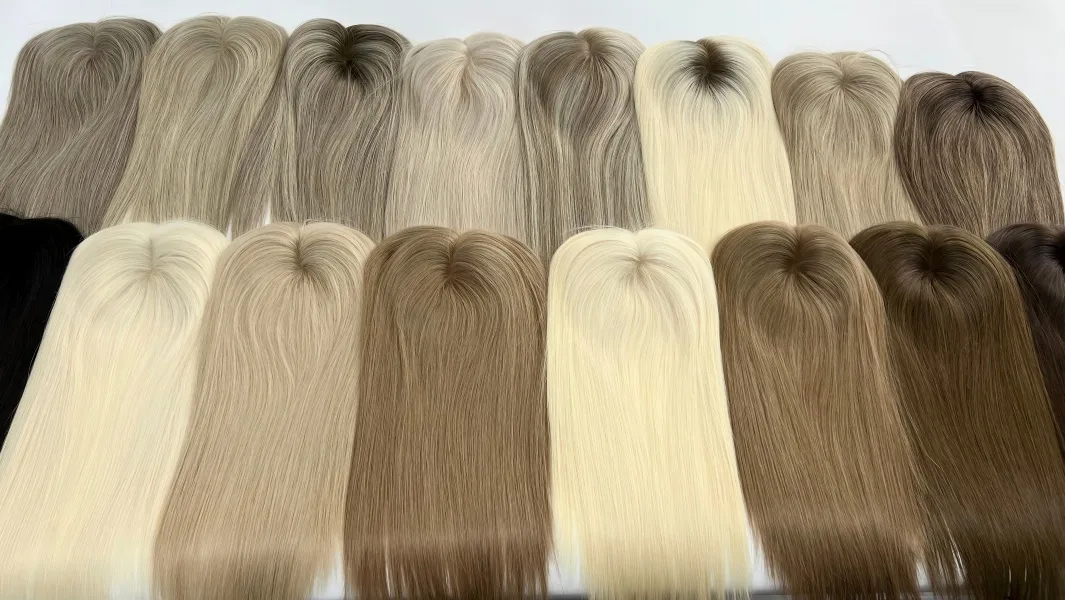
Quick Answer: Should a Salon Buy In-Stock or Custom Wigs?
In-stock wigs are generally better for immediate client needs, product testing, replenishment, and salons that want to start with lower inventory risk. Custom wigs are more suitable when a client or salon requires specific specifications that are not available from stock.
For many professional salons, the most flexible approach is not choosing one or the other.
It is:
Stock what sells regularly. Customize what requires special specifications.
This allows a salon to respond quickly to common customer needs while avoiding excessive inventory.
1. What Are In-Stock Wigs?
In-stock wigs are finished products that have already been manufactured and are available for purchase and dispatch, subject to current inventory.
Instead of waiting for production, a salon can select from available specifications.
Depending on the manufacturer, in-stock wigs may include different:
- Lengths
- Colors
- Densities
- Textures
- Cap constructions
- Lace options
- Styles
- Hair qualities
The exact stock selection varies between manufacturers.
For a salon, the biggest advantage is simple:
The product already exists.
That can significantly shorten the time between purchasing and receiving the product.

2. Why In-Stock Wigs Matter to Salons
Imagine that a client has an appointment next week.
She has selected a human hair wig.
Your stylist has scheduled the service.
But the wig you need is not available.
The manufacturer tells you:
“We can make it.”
The problem?
Production may take weeks.
The salon now has to manage the client’s expectations, appointment schedule, and purchasing timeline.
This is where in-stock wigs can provide a practical advantage.
They can be useful for:
- Urgent client requirements
- Replenishment
- Product testing
- New salons entering the wig market
- Popular colors and lengths
- Repeat-selling products
- Smaller initial purchases
- Time-sensitive appointments
For a professional salon, availability can sometimes be just as important as the initial wholesale price.
3. In-Stock Does Not Mean You Should Stock Everything
This is an important distinction.
Having access to in-stock wigs does not mean a salon should fill its storage room with every possible specification.
That can create unnecessary inventory risk.
A better strategy is to identify your most likely sellers.
For example, you may discover that your clients frequently request:
- Natural black
- Brown shades
- Medium lengths
- Medium density
- Straight textures
- Wavy textures
You can then keep a focused selection available.
The objective is not:
“Have every wig.”
The objective is:
“Have the right wigs.”
4. What Are Custom Wigs?
Custom wigs are manufactured according to specific requirements rather than selected entirely from existing inventory.
Depending on the manufacturer’s capabilities, customization may include:
- Hair length
- Hair density
- Hair color
- Texture
- Cap size
- Cap construction
- Lace type
- Hairline
- Parting
- Base materials
- Special construction requirements
- Private label
- OEM specifications
However, customization varies by manufacturer.
Before placing a custom order, always ask:
What exactly can be customized?
Do not assume that “custom wig” means every component can be changed.
5. When Should a Salon Choose Custom Wigs?
Custom wigs can be particularly useful when the standard products available from stock do not meet the client’s requirements.
For example, a client may need:
A specific density.
A specific color.
A specific cap size.
A particular hair length.
A particular texture.
A specific hairline.
Or a combination of specifications.
In this situation, forcing a standard wig to fit the requirement may not be the best solution.
Custom manufacturing gives the salon more control.
It can also become valuable when the salon begins developing its own signature products.
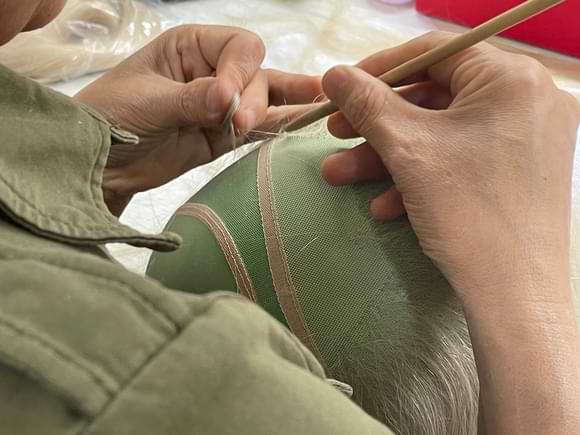
6. In-Stock vs. Custom Wigs: The Main Differences
| Factor | In-Stock Wigs | Custom Wigs |
|---|---|---|
| Availability | Already manufactured | Made after order |
| Speed | Usually faster | Requires production time |
| Product selection | Limited to current stock | More specifications possible |
| Customization | Limited | Higher |
| Inventory risk | Lower for testing | Higher if ordered before demand is proven |
| Client-specific requirements | Sometimes limited | More flexible |
| Urgent orders | More suitable | Less suitable |
| Product development | Limited | Strong |
| Private label | Usually limited | Often possible |
| Best for | Testing and replenishment | Specific requirements and long-term development |
The best choice depends on the situation.

7. Why a Salon May Need Both
Professional salons often have two different types of demand.
Demand Type 1: “I Need It Now”
The client has an appointment.
The product is already selected.
The salon needs the wig quickly.
In-stock is usually the better option.
Demand Type 2: “I Need Something Specific”
The client wants a particular:
- Color
- Density
- Length
- Texture
- Cap
- Hairline
- Construction
Custom manufacturing may be the better option.
This creates a simple purchasing strategy:
In-stock for speed.
Custom for specificity.
8. The Best Strategy for a New Salon Entering the Wig Market
If your salon has never sold wigs before, do not automatically start by ordering a large custom collection.
You have not yet learned what your customers want.
Instead, start with a controlled test.
A practical approach is:
Test → Learn → Reorder → Expand → Customize
Start with selected in-stock products.
Introduce them to suitable clients.
Record what customers actually request.
Then identify your best-selling:
- Colors
- Lengths
- Densities
- Textures
- Styles
Reorder those products.
Only after you understand demand should you consider developing a larger custom collection.
9. Why Inventory Risk Matters
A wig can be expensive inventory.
If you purchase a large number of products before understanding demand, your money becomes tied up in stock.
For example, you may order:
20 colors
5 lengths
3 densities
4 textures
The theoretical product combinations become enormous.
But your customers may only purchase a small number of those combinations.
This is why product selection should be based on actual customer demand rather than the size of a supplier’s catalog.
10. The Hidden Cost of Slow-Moving Wig Inventory
The purchase price is not the only cost.
Slow-moving inventory can create:
- Cash flow pressure
- Storage requirements
- Discounting
- Product aging
- Reduced purchasing flexibility
- Less money available for best-selling products
A salon therefore needs to consider:
How quickly can this product realistically sell?
Before purchasing a large quantity, ask whether the product has already demonstrated demand.
11. The Opposite Problem: Running Out of a Best Seller
Buying too much is one problem.
Buying too little is another.
Imagine that your salon discovers a wig that clients love.
You sell several units.
Then a client asks for the same product.
You check your inventory.
Out of stock.
You contact the supplier.
The supplier says the product must be manufactured.
Now you may have to wait.
This can create:
- Lost sales
- Delayed appointments
- Disappointed clients
- Additional communication
- Potentially lost repeat business
This is why replenishment capability matters.
A good supplier should not only help you buy your first product.
It should help you obtain the next one.
12. Ask Your Wig Manufacturer for the Current Stock List
One of the simplest ways to reduce purchasing uncertainty is to ask for the latest in-stock list.
Do not rely only on the products displayed on a website.
Inventory changes.
A product that was available last month may not be available today.
When contacting a manufacturer, ask for:
- Current in-stock wigs
- Available colors
- Available lengths
- Available densities
- Available textures
- Quantity available
- Dispatch timing
- Wholesale pricing
This allows you to make a purchasing decision based on current inventory rather than assumptions.
For professional buyers, you can also explore our professional hair solutions for salons and stylists.
13. What Should You Do When a Client Needs a Custom Wig?
Do not automatically keep every possible specification in stock.
Instead, separate your products into two groups.
Products You Sell Frequently
Keep selected versions in stock.
Products Customers Request Occasionally
Use custom manufacturing when appropriate.
This creates a more efficient inventory model.
For example:
Popular black human hair wig → In stock
Popular medium-length wig → In stock
Unusual color + specific density + custom cap → Custom
This approach allows your salon to provide more choices without carrying every product physically.
14. In-Stock Wigs Are Especially Useful for Product Testing
If you are a salon owner considering adding wigs for the first time, in-stock products can reduce the commitment required to test the category.
You can start with a small selection.
Then ask:
Which products get attention?
Which products receive consultations?
Which products actually sell?
Which colors are requested repeatedly?
Which lengths are popular?
Which price points work?
This information is more valuable than guessing what your clients might buy.
15. What About Salons That Already Sell Hair Extensions?
If your salon already sells extensions, you have an advantage.
Your customers are already purchasing professional hair products.
They may already ask for:
- More volume
- More length
- Different textures
- Hair transformation
- Coverage
- Alternative styling options
This means wigs can become another product category rather than an entirely new business.
If you are new to professional hair products, you may also want to start with a focused extension range before expanding into wigs.
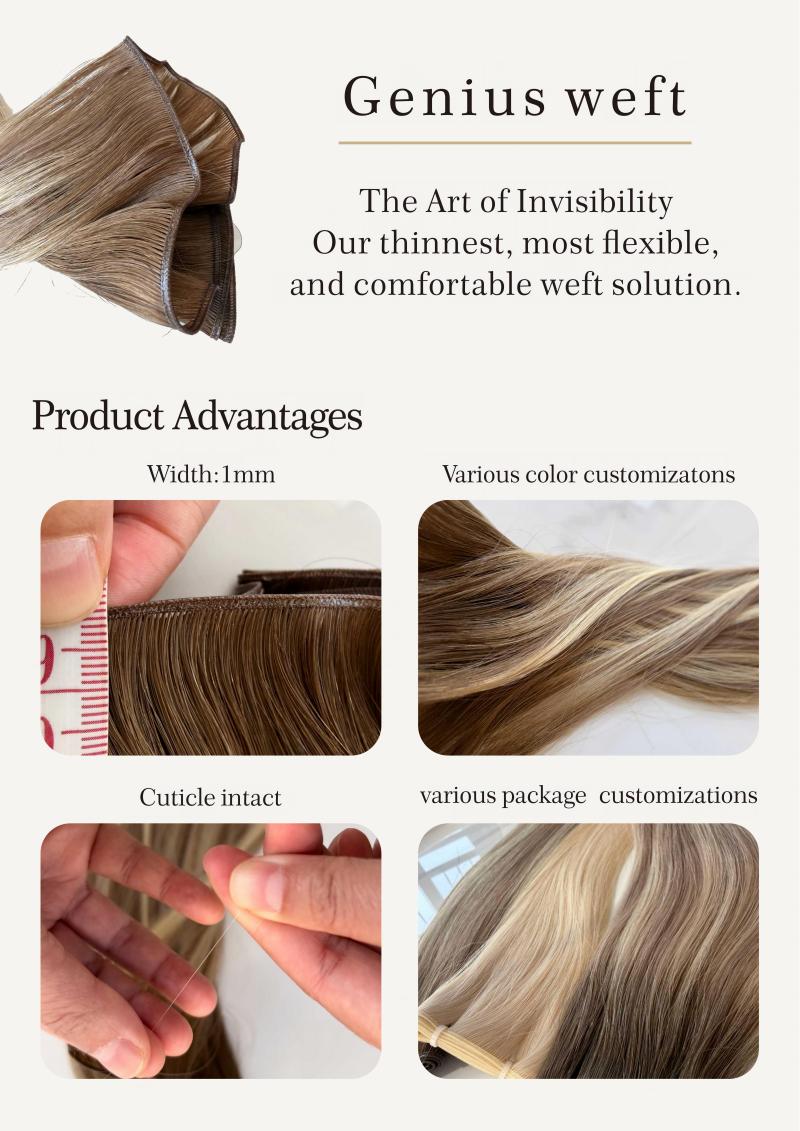
For example, Genius Weft extensions can be tested with existing extension clients before adding a broader wig collection.
Explore our professional salon hair solutions to see how different product categories can fit into a salon business.
16. Wigs vs. Extensions: Which Should You Start With?
There is no universal answer.
It depends on your existing clients.
| Existing Customer Need | Possible Starting Product |
|---|---|
| More length | Hair extensions |
| More volume | Genius Weft / extensions |
| Localized thinning | Hair topper |
| Greater coverage | Human hair wig |
| Complete hair transformation | Human hair wig |
| Client-specific requirements | Custom wig |
If your salon already performs extension services, extensions may be a natural starting point.
If your clients frequently ask about coverage or hair loss, wigs or toppers may be more relevant.
The important thing is to start with the problem your clients are already asking you to solve.
17. Why Genius Weft Can Be a Practical First Test
For salons that are interested in adding professional hair products but are not ready to build a complete wig business, a focused extension product can be a lower-complexity starting point.
Genius Weft can be tested with clients who already want:
- More volume
- More length
- A fuller appearance
- A change in hairstyle
Rather than purchasing every type of extension, a salon can test a focused selection.
For example:
- Common colors
- Popular lengths
- Suitable textures
- Reasonable quantities
Once you know what sells, you can expand.
This follows a simple principle:
Do not build inventory first and look for customers later.
Find customer demand first, then build inventory around it.
18. When Should You Move From Stock Products to Custom Manufacturing?
Custom manufacturing becomes more attractive when you have enough information to justify it.
You may consider customization when:
- Clients repeatedly request a specific specification
- Your salon has identified a best-selling product
- Standard stock does not meet your requirements
- You want a signature product
- You want custom colors
- You need specific density
- You want a particular cap construction
- You are developing private label
- You are developing an OEM collection
At this point, customization is no longer simply an experiment.
It can become part of a product-development strategy.
19. Custom Manufacturing Should Follow Demand
One of the biggest mistakes a new buyer can make is customizing products before understanding the market.
Imagine creating a completely customized wig:
- Special color
- Special density
- Special length
- Special cap
- Special packaging
But then discovering that your customers do not actually want it.
The product may become slow-moving inventory.
A better sequence is:
Customer Demand
↓
Product Test
↓
Best Seller Identified
↓
Repeat Orders
↓
Custom Development
↓
Private Label / OEM
This reduces unnecessary product-development risk.
20. How a Salon Can Build a Wig Inventory Strategy
A simple model is to divide products into three groups.
Group A — Fast-Moving Products
Keep in stock.
These are products with demonstrated demand.
Group B — Occasional Products
Keep limited quantities or order when needed.
Group C — Highly Specific Products
Use custom manufacturing.
This creates a three-level inventory model:
Stock → Limited Stock → Custom
It is much more practical than trying to stock everything.
21. A Simple Wig Purchasing Strategy for Different Salon Stages
Stage 1 — You Are Completely New to Wigs
Start with a small number of in-stock products.
Learn.
Test.
Do not overbuy.
Stage 2 — You Have Identified Demand
Reorder your best sellers.
Build a focused stock range.
Stage 3 — Clients Ask for More Options
Add related products.
Consider toppers, additional wig specifications, or extensions.
Stage 4 — You Have Repeat Demand
Consider custom manufacturing.
Stage 5 — You Have a Proven Product Concept
Consider OEM or private label.
This progression can be much safer than launching a large collection immediately.
22. What Should a Salon Ask a Wig Manufacturer Before Ordering?
Before placing an order, ask:
Product
What hair quality do you offer?
What wig constructions are available?
What lengths are available?
What densities are available?
What colors are available?
What textures are available?
Inventory
What wigs are currently in stock?
How many units are available?
How often is inventory updated?
How quickly can in-stock products be dispatched?
Custom
What can be customized?
What is the MOQ?
What is the production lead time?
Can specifications be reproduced for repeat orders?
Quality
How is the hair inspected?
How is construction checked?
How is density checked?
How are finished products inspected?
Business
What are your wholesale prices?
Do you offer samples?
Do you support salons?
Do you offer OEM?
Do you offer private label?
Can you supply extensions and wigs?
These questions can quickly separate a simple product seller from a manufacturer capable of supporting a professional business.
23. Manufacturer vs. Distributor for In-Stock Wigs
If your priority is speed, you may naturally compare distributors and manufacturers.
A distributor may provide:
- Local inventory
- Faster local delivery
- Smaller orders
- Convenient purchasing
A direct manufacturer may provide:
- Factory-direct pricing
- Custom manufacturing
- Product development
- OEM
- Private label
- Direct communication
- Multiple product categories
Neither model is automatically better.
The correct choice depends on your business model.
If you need a single wig immediately, local inventory may be extremely valuable.
If you are building a long-term product range, direct manufacturing may offer more flexibility.
For larger professional sourcing requirements, see our wholesale hair supply and distribution services.
24. Why One Supplier for Wigs and Extensions Can Be Useful
As your business grows, your sourcing needs may become more complicated.
You may eventually need:
Human hair wigs
Hair extensions
Genius Weft extensions
Hair toppers
Custom wigs
Custom extensions
OEM products
Private-label products
Working with multiple suppliers can create additional work:
Different specifications.
Different quality standards.
Different shipping arrangements.
Different communication.
Different reorder processes.
A manufacturer capable of supporting multiple professional hair categories can simplify sourcing.
However, the goal should not be to use one supplier simply for convenience.
The supplier still needs to meet your quality and business requirements.
25. How to Compare In-Stock Wig Suppliers
Do not compare suppliers only by the number of wigs they claim to have.
Instead, evaluate:
| Factor | What to Check |
|---|---|
| Current inventory | Is stock actually available? |
| Hair quality | What is the actual hair quality? |
| Construction | Is the workmanship consistent? |
| Specifications | Are details clearly documented? |
| Replenishment | Can popular products be reordered? |
| Customization | Can special requirements be produced? |
| MOQ | Is the quantity suitable for your business? |
| Lead time | How quickly can custom products be made? |
| Communication | Are questions answered clearly? |
| Quality control | Is there a defined inspection process? |
| Wholesale pricing | Is the price competitive for the specification? |
| Repeat orders | Can the same specification be reproduced? |
This is much more useful than asking:
“Who has the cheapest wig?”
26. How to Reduce the Risk of Your First Wig Order
If you are a new salon buyer, consider a small test.
Step 1
Choose a limited number of products.
Step 2
Order samples or a manageable quantity.
Step 3
Test the products with appropriate clients.
Step 4
Record customer feedback.
Step 5
Identify your best sellers.
Step 6
Reorder successful products.
Step 7
Expand gradually.
Step 8
Consider custom manufacturing after demand becomes clearer.
This gives you real market information before committing more capital.
27. What If You Need Wigs Urgently?
If you have an upcoming client appointment, do not begin the conversation by asking only:
“Can you make this wig?”
Ask:
“Do you have this specification in stock?”
If yes, ask:
“How quickly can it be dispatched?”
If it is not available, then ask:
“What is the production lead time for a custom order?”
This simple sequence can save time.
It also helps you distinguish between:
Immediate supply
and
Manufacturing supply.
Both are valuable, but they solve different problems.
28. What If You Need a Wig That Is Not in Stock?
This is where a manufacturer’s custom capability becomes important.
A good sourcing relationship should give you more than one option.
For example:
Option 1 — Choose a similar in-stock wig
If the client is flexible.
Option 2 — Wait for the next stock replenishment
If timing allows.
Option 3 — Place a custom order
If the specification is important.
This is why a supplier offering both inventory and manufacturing can provide greater flexibility than a supplier offering only one model.
29. In-Stock and Custom Wigs Can Work Together
The strongest salon sourcing strategy may look like this:
Everyday Demand
In-stock
↓
Best Sellers
Keep replenished
↓
Special Requests
Custom
↓
Proven Custom Products
Repeat production
↓
Strong Product Concept
OEM / Private Label
This turns inventory management into a progressive system rather than a one-time purchasing decision.
30. How to Build a Lower-Risk Product Expansion Strategy
If your salon is expanding beyond its traditional services, do not feel pressured to launch everything.
You can begin with one product category.
For example:
Hair Extensions
↓
Genius Weft
↓
Selected In-Stock Wigs
↓
Toppers
↓
Custom Wigs
↓
OEM / Private Label
The actual order may differ depending on your customers.
The principle remains:
Start with proven demand.
31. The Right Supplier Should Support Both Speed and Flexibility
A professional salon does not always have the same purchasing requirement.
One week you may need:
A ready-to-ship wig.
Another month you may need:
A custom color.
Later, you may need:
A larger wholesale order.
Eventually, you may want:
Your own private-label collection.
Your supplier should ideally be able to support these different stages.
This is why evaluating a manufacturer only by its product catalog or first quotation can be misleading.
The more important question is:
Can this supplier support my business as my requirements change?
32. How YELUX Supports Salon Buyers
YELUX works with professional salons, stylists, wholesalers, and hair businesses looking for human hair products.

Our professional product range includes:
- Human hair wigs
- Genius Weft extensions
- Hair extensions
- Hair toppers
- Customized hair products
- OEM and private-label options
For salons, the sourcing model can combine:
Selected in-stock products
for faster purchasing and product testing,
with
Custom manufacturing
for specific requirements and long-term product development.
Explore our professional hair solutions for salons and stylists.
For larger wholesale requirements, you can also explore our wholesale hair supply and distribution services.
33. How to Request the Latest In-Stock Wig List
Because inventory changes continuously, the most accurate way to check availability is to request the current stock list.
When contacting YELUX, please provide:
Company Name
Country
Business Type
Products You Need
Preferred Length
Preferred Color
Preferred Density
Preferred Texture
Estimated Quantity
In-Stock or Custom Requirement
This allows the supplier to understand your needs and identify the most suitable available products.
If you are testing wigs for the first time, you can also explain that you are a salon looking to introduce wigs as a new product category.
This helps the manufacturer recommend a more appropriate starting range rather than simply sending you a large catalog, please email to: [email protected]
34. In-Stock vs. Custom: A Simple Decision Guide
Use this quick decision framework.
Choose In-Stock When:
You need the product quickly.
You have an upcoming client appointment.
You are testing the wig category.
You are unsure what will sell.
You need to replenish a popular product.
You want to start with lower inventory risk.
Choose Custom When:
The client needs specific specifications.
The standard stock range does not meet your requirements.
You need a special color.
You need a particular density.
You need a specific cap.
You are developing a signature product.
You are developing private label.
You have already proven demand.
35. The Best Approach Is Often Not “In-Stock or Custom”
The real question is:
Which products should I keep in stock, and which products should I customize?
That is a much better business question.
A professional salon can maintain a focused inventory of products that sell regularly.
At the same time, it can use custom manufacturing to serve customers with special requirements.
This gives the salon:
Speed + Flexibility
Lower inventory risk + More product options
Immediate availability + Custom development
That combination can be much more powerful than relying entirely on one purchasing model.
36. Final Takeaway
For a salon entering or expanding into the wig market, the decision between in-stock and custom wigs should be based on business stage, customer demand, and purchasing risk.
If you are new to wigs:
Start small.
If you need products quickly:
Use in-stock inventory.
If clients repeatedly request specific specifications:
Consider custom manufacturing.
If a product sells consistently:
Reorder it and maintain sensible inventory.
If you develop a proven product concept:
Consider customization, OEM, or private label.
The practical progression is:
Test → Learn → Reorder → Expand → Customize → Brand
You do not need to become a specialist wig store overnight.
You can start by solving the needs of the clients you already have.
A client who asks for more volume may need extensions.
A client experiencing localized thinning may benefit from a topper.
A client requiring greater coverage may need a wig.
A client with a very specific requirement may need a custom product.
The opportunity for a salon is not simply to sell more hair.
It is to provide more appropriate solutions to the clients who already trust your business.
Frequently Asked Questions
Are in-stock wigs better for salons?
Not necessarily. In-stock wigs are generally more suitable when speed, product testing, or replenishment is important. Custom wigs are more suitable when specific product requirements need to be manufactured.
What does “in-stock wig” mean?
An in-stock wig is a finished product that is currently available from the supplier and can generally be dispatched without waiting for a new production run. Actual availability should always be confirmed with the manufacturer.
Are custom wigs more expensive?
Custom wigs may cost more depending on the specifications, customization requirements, quantity, and manufacturing process. Always request a quotation based on the exact specifications.
How long does it take to make a custom wig?
Production time varies according to the product, specifications, quantity, and manufacturer’s current workload. Ask for the current production lead time before placing an order.
Should a new salon start with wigs?
A salon does not need to start with a large wig inventory. A focused selection of in-stock products can be a practical way to test customer demand before expanding.
Should a salon start with wigs or extensions?
It depends on the clients you already serve. Salons with existing extension services may find extensions a natural starting point, while salons receiving frequent requests for coverage may consider wigs or toppers.
Can a wig manufacturer supply both in-stock and custom wigs?
Some manufacturers offer both models. This can give salons flexibility to purchase ready-to-ship products while using custom manufacturing for special requirements.
Can I request an in-stock wig list?
Yes. Since inventory changes continuously, professional buyers should request the manufacturer’s latest stock list rather than relying only on an online catalog.
Can I order both wigs and Genius Weft extensions?
Some manufacturers supply multiple professional hair categories. This can allow salons to test extensions and wigs through the same manufacturing relationship.
Can salons develop private-label wigs?
Depending on the manufacturer, salons and hair businesses may be able to develop private-label wigs or customized collections. MOQ, packaging, specifications, and production requirements vary.
Ready to Compare In-Stock and Custom Wig Options?
If you are a salon, stylist, wholesaler, or professional hair business looking for human hair wigs, Genius Weft extensions, or customized hair products, YELUX can support both selected in-stock products and custom manufacturing.
To request the latest availability and wholesale information, please send:
Company Name + Country + Business Type + Products Needed + Preferred Specifications + Quantity
We can then determine whether an in-stock product, sample, or custom manufacturing solution is the most appropriate starting point for your business.
Explore our Professional Hair Solutions for Salons & Stylists.
Explore our Wholesale Hair Supply & Distribution.
Start with the products your customers need. Test what sells. Replenish what works. Customize when demand is proven.